
When Language Becomes Identity, and Cinema Becomes Resistance – ‘Parasakthi’ Movie Review
 By 'Ottran' Dorai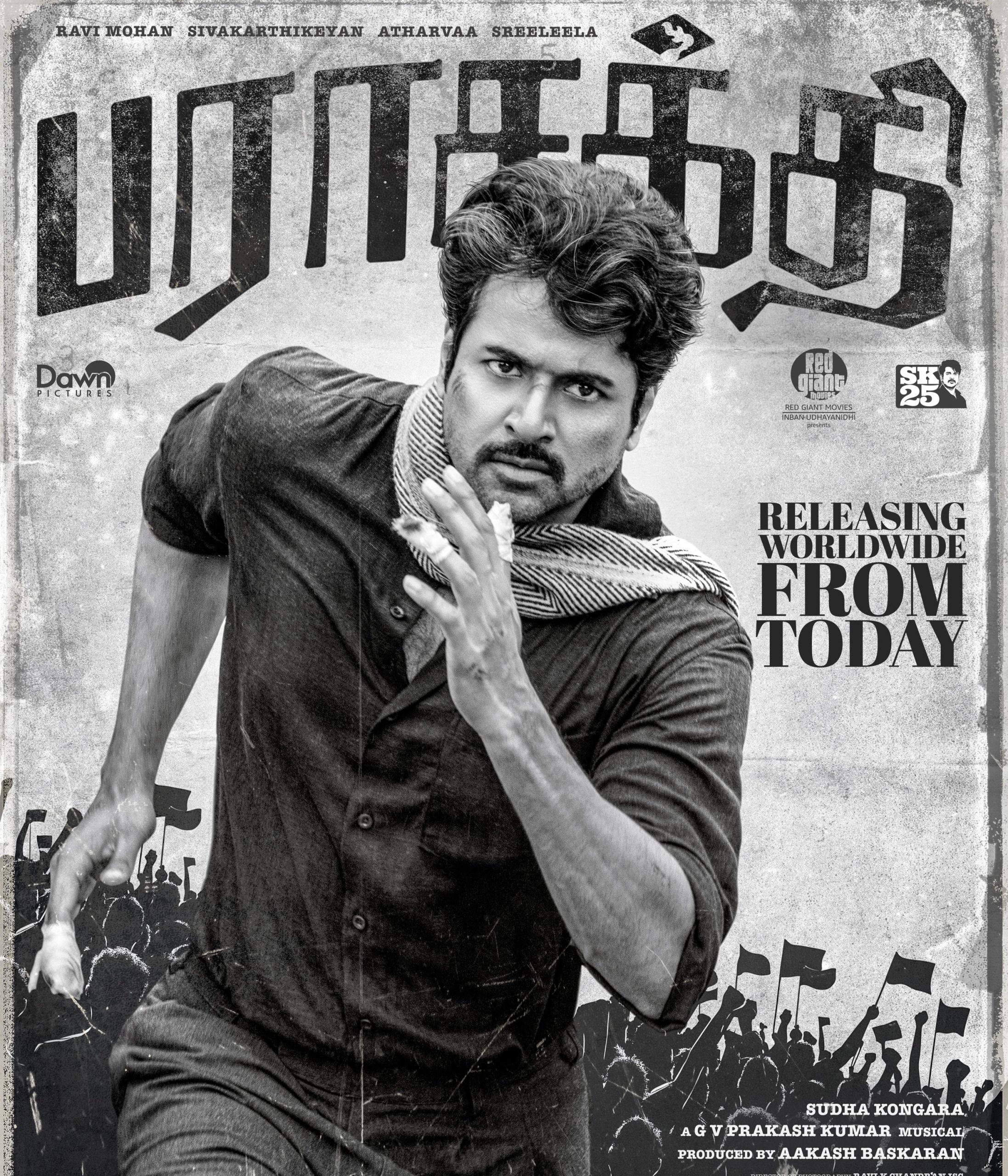
Parasakthi is not designed as a routine period drama or a loud political statement. Instead, it approaches a sensitive chapter of Tamil history through the lens of ordinary people whose lives are quietly reshaped by ideology, fear, loss, and conviction. The film attempts to explore how language politics seep into personal spaces and alter destinies far beyond protest grounds.
The narrative follows a protagonist who begins as an idealistic young man driven by collective purpose. As circumstances change and personal tragedies strike, his relationship with the movement also evolves. This emotional shift forms the backbone of the film, allowing the story to move beyond slogans and into human conflict. The struggle here is not just against authority, but also against doubt, fatigue, and moral compromise.
The lead performance anchors the film with restraint and intensity. Instead of exaggerated theatrics, the character is built through controlled expressions, silences, and gradual emotional transformation. The antagonist, rather than being portrayed as a conventional villain, is written with ideological firmness, making the conflict more layered and unsettling.
Visually, Parasakthi captures the atmosphere of its time with convincing detail. Protest sequences are staged with realism, focusing less on spectacle and more on tension and consequence. The background score supports the narrative without overwhelming it, allowing moments of silence to speak just as powerfully as dialogue.
While the film occasionally slows down due to its deliberate pacing, it never loses sight of its core intent. It avoids becoming a one-dimensional propaganda piece and instead questions the cost of resistance on individuals and families. The screenplay prioritizes emotional truth over dramatic shortcuts, which may not appeal to everyone but adds sincerity to the experience.
In essence, Parasakthi stands as a politically aware yet emotionally grounded film. It does not demand agreement from the audience, but it does demand reflection. As a cinematic work, it succeeds in reminding viewers that history is not only written through movements, but also through the quiet suffering and courage of individuals.
Rating: 4/5
Comments (0)
No comments yet. Be the first to share your thoughts!
Leave a Reply
* Your email address will not be published. Required fields are marked with an asterisk.