
A Dark, Violent Journey Through a World of Broken Men - DC Movie Review
 By 'Ottran' Dorai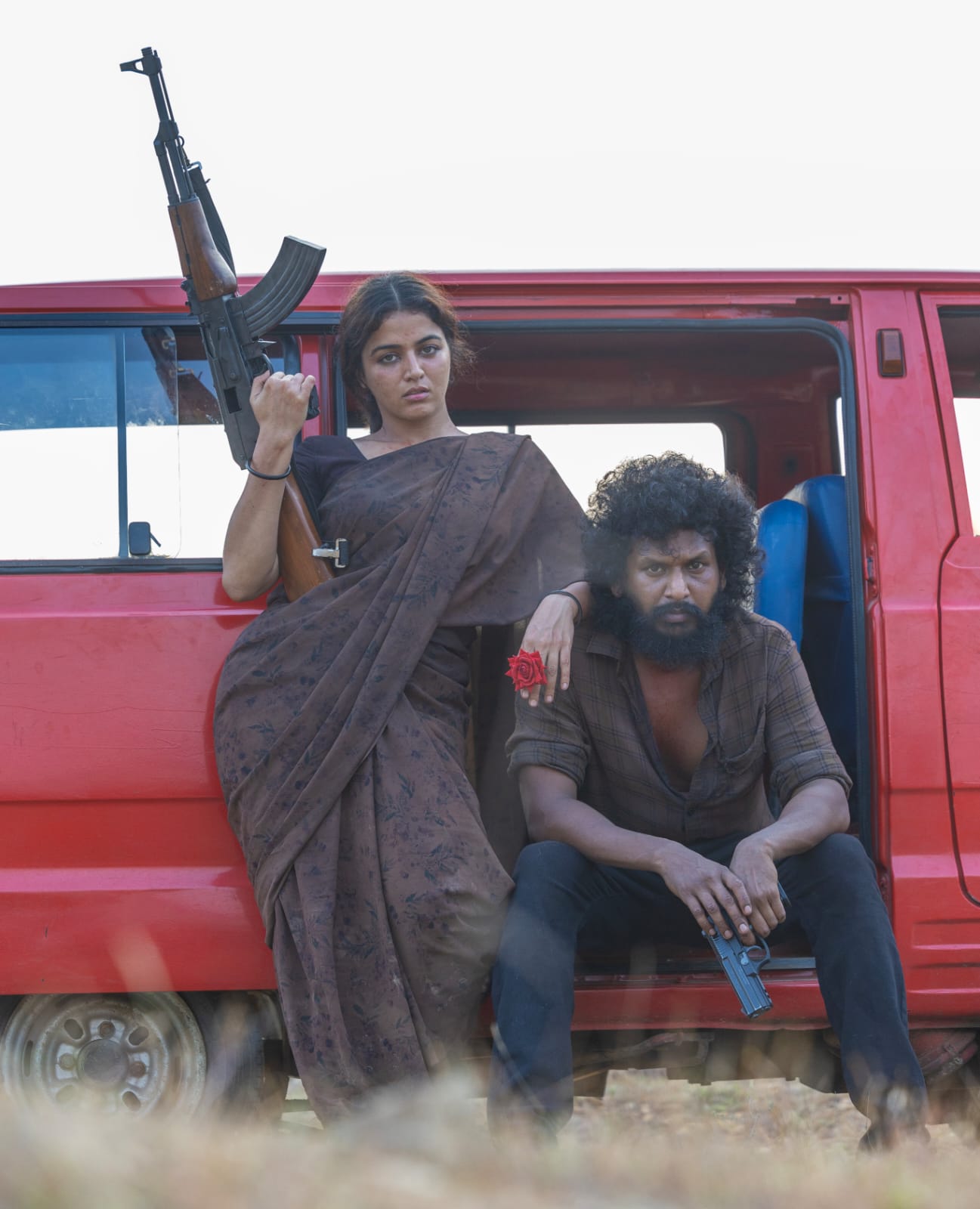
Not every gangster film needs a larger-than-life hero, a flamboyant villain and a predictable revenge track. Some films are more interested in exploring the people who inhabit that violent world and the circumstances that shape them. DC takes that route, creating a grim and unpredictable world around its central character, Devadas.
Written and directed by Arun Matheswaran, DC revolves around Devadas, a man whose life is deeply entangled with crime, violence and complicated relationships. As he moves through a world where loyalty can change in an instant and survival often comes at a price, the people around him become as important as the conflicts he faces. The film gradually builds its narrative through these relationships rather than depending entirely on conventional hero-versus-villain storytelling.
What makes DC interesting is the way it presents its characters. There is rarely a clean division between good and evil. Most of the people in Devadas' world carry their own baggage, motives and weaknesses. This gives the film a rough, lived-in quality and allows the story to operate in shades of grey.
Lokesh Kanagaraj, making a notable appearance as an actor, plays Devadas. The character demands restraint rather than constant theatricality, and Lokesh largely keeps his performance under control. His body language does much of the work, particularly in scenes where Devadas has to communicate anger or tension without saying much. The action portions also suit his physical presence. There are moments where his performance could have benefited from greater emotional depth, but he brings an interesting screen personality to the role.
Wamiqa Gabbi plays Chandra, one of the strongest characters in the film. Chandra is not merely positioned as a romantic presence in Devadas' life. Her character carries her own emotional weight and gradually becomes an important part of the narrative. Wamiqa brings intensity to the role, particularly in scenes where vulnerability and aggression exist side by side.
Sanjana A.K. as Parvathi provides another emotional dimension to Devadas' journey. Her character brings a softer human element into an otherwise harsh environment, and Sanjana handles those portions with naturalness. Though her screen presence is relatively limited, the character leaves an impact on Devadas and the emotional progression of the story.
Among the supporting cast, Kasthuri Raja, Thalaivasal Vijay, Krish Dayal, Avinash Raghudevan, Jawahar Sakthi and Sharath Ravi contribute effectively to the film's unusual collection of characters. They help establish the atmosphere of a world where every individual appears to have a story beyond what is immediately visible on screen.
Arun Matheswaran's direction remains one of the film's biggest attractions. He does not attempt to make the criminal world glamorous. Instead, violence is presented as something ugly, sudden and consequential. The film frequently shifts between quiet stretches and bursts of brutality, creating an uneasy rhythm.
The action choreography by PC Stunts complements this approach. The fights are not designed merely as celebratory hero moments. They are physical, aggressive and often uncomfortable to watch. However, the repeated use of violence also means that some sequences begin to lose their impact as the film progresses.
The visual treatment by cinematographer Mukesh G deserves special mention. The film has a deliberately dark visual identity, with controlled lighting and compositions that reinforce the mood of the story. The camera becomes particularly effective during the tense sequences, where movement and framing add to the sense of danger.
Anirudh's music is another major component of the film's atmosphere. Rather than simply accompanying the action, the background score frequently pushes the tension forward. Several scenes gain considerably from the intensity of the score, especially when the narrative suddenly shifts gears.
Editor G.K. Prasanna keeps the film moving through its numerous confrontations and action-heavy portions. The production design by Kannan S also contributes to the film's gritty world, giving the locations an appropriately raw character.
Where DC occasionally struggles is in the balance between its characters and its larger narrative. Some characters are introduced with enough potential to make us want to know more about them, but the screenplay does not always give them sufficient space. A few emotional developments could also have been explored more deeply. Because of this, certain portions feel more like glimpses into a larger world rather than fully developed dramatic arcs.
Yet, the film deserves credit for refusing to become a routine gangster entertainer. It is more interested in atmosphere, character behaviour and the consequences of living in a violent environment than in delivering constant commercial highs.
DC is not a film that will appeal equally to everyone. Viewers looking for a straightforward commercial action movie may find its darker tone and character-driven approach demanding. But audiences who enjoy raw crime dramas, morally complicated characters and an uncompromising visual style may find enough here to appreciate.
The biggest strength of DC is its attempt to create its own world. The film may not get everything right, but it carries a distinct personality from beginning to end.
Rating: 3.25/5
Comments (0)
No comments yet. Be the first to share your thoughts!
Leave a Reply
* Your email address will not be published. Required fields are marked with an asterisk.